

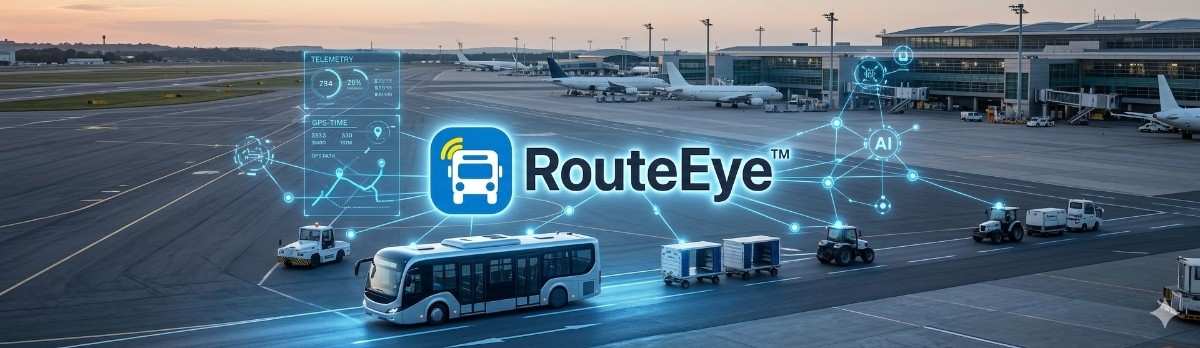
The modern airport is a city that never sleeps. Beyond the passenger terminals and boarding gates lies a massive, highly complex web of ground operations. From baggage tractors and catering trucks to emergency ambulances and passenger shuttle buses, hundreds of vehicles must move in perfect harmony to ensure flights depart on time.
Yet, managing this massive ecosystem presents immense challenges. Operational inefficiencies, unoptimized routes, idle vehicle times, and high carbon emissions frequently plague traditional airside management. To solve these friction points, progressive hubs are turning to advanced technology like the solutions detailed in the RouteEye – Airport 2.0.pdf document, implementing dedicated, enterprise-grade airport fleet management systems to gain complete operational transparency.
The Hidden Costs of Airside Inefficiency
Ground Support Equipment (GSE) and airside vehicles are the unsung heroes of airport punctuality. However, without centralized digital visibility, operations face severe bottlenecks:
- Low Asset Utilization: Without data-driven insights, airports often over-fleet or leave expensive vehicles underutilized.
- Safety & Compliance Risks: High-risk zones like active runways require flawless driving behavior. Speeding, unauthorized entry, or driver fatigue can lead to catastrophic safety breaches.
- Fuel Waste & Carbon Impact: Idle vehicles waiting on the tarmac burn fuel unnecessarily, inflating operating costs and stalling airport sustainability targets.
How AI-Powered Tracking Transforms Airport Mobility
Implementing an intelligent Platform-as-a-Service (PaaS) solution fundamentally changes how ground handlers manage assets. By deploying a system equipped with GPS, GSM tracking devices, and cloud architecture, airports achieve seamless control over every moving part.
1. Real-Time Runway Vehicle Tracking
Airside tracking requires pinpoint accuracy. Advanced systems monitor tractors, jeeps, trucks, and specialized equipment in real time. Automated smart alerts instantly flag route deviations or unauthorized stops, ensuring strict compliance with stringent aviation security regulations.
2. Synchronized Passenger & Staff Transport
Managing internal airport buses and community fleets requires dynamic scheduling. AI-powered time and distance prediction software calculates exact ETAs. This data feeds directly into in-bus and bus stop display screens, eliminating passenger anxiety and streamlining terminal transit.
3. Proactive Driver Safety & Telematics
An effective platform monitors driver behavior behind the wheel. The system detects harsh braking, sudden acceleration, distraction, and signs of fatigue. Coupled with built-in SOS support on driver apps, airport authorities can guarantee both worker safety and vehicle accountability.
The Flight Path Forward
As passenger volumes rise, traditional manual reporting and fragmented views no longer suffice. Transitioning to a scalable, pay-as-you-go fleet management infrastructure empowers airport operators to make data-driven decisions, maximize asset life, and secure a safer tarmac. Upgrading to automated fleet intelligence is no longer just an operational upgrade it is a competitive necessity for the smart airports of tomorrow.
FAQ
What specific vehicles can it track at airports?
It tracks runway vehicles (tractors, jeeps, trucks), airport community buses, staff transport, and luggage carriers.
How does it improve driver safety?
The system monitors driver behavior for anomalies like harsh braking, rapid acceleration, fatigue, phone distractions, and smoking.
Can it integrate with existing software??
Yes, it features a plug-and-play architecture with open APIs for seamless integration into ERP, TMS, and IoT ecosystems.
What is the pricing model??
It operates on a flexible, scalable “pay-as-you-go” model, allowing you to start tracking with a single vehicle.

Leave a Reply